Syga Thomas

About

A diplomat’s read on markets.

Syga Thomas spent more than eight years in the U.S. Diplomatic Service before founding Ensah Advisory Partners. His work sits where political decisions meet economic consequences.

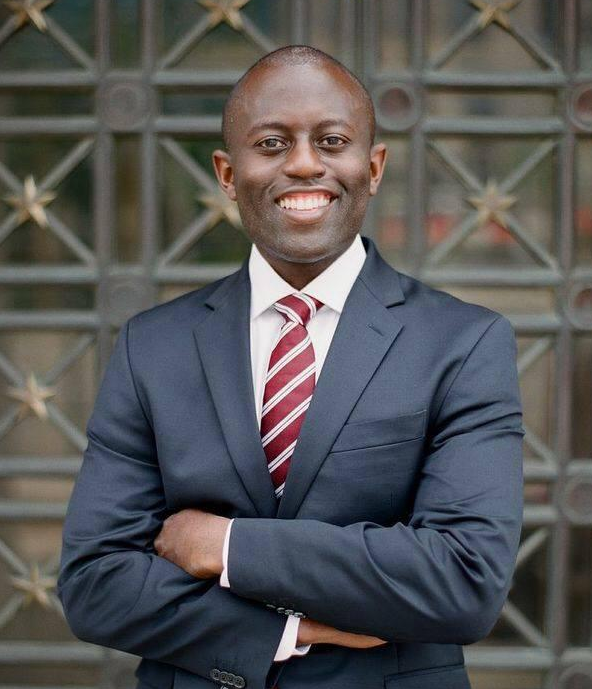
Portrait of Syga Thomas, geopolitical strategist and former U.S. diplomat

Syga Thomas is an economist and geopolitical strategist, and the founder and CEO of Ensah Advisory Partners. He advises investors, corporate leadership teams and public institutions on how political developments move markets, with particular depth on the Middle East, Africa and Europe.

From 2007 to 2015 he served in the U.S. Diplomatic Service, specialising in European, Middle Eastern and African affairs, transatlantic relations and trade policy. His postings included South Korea, Niger, Pakistan, Spain and Washington, D.C., and his final assignment was with the State Department’s Office of Multilateral and Government Affairs.

In 2016 he founded Ensah Advisory Partners to give decision-makers a disciplined view of political and country risk, especially in regions that global coverage tends to underweight.

He is a regular guest on Bloomberg Television, CNBC International and BBC News, and has contributed to Bloomberg Asharq and CNBC Arabia. He holds a master’s degree in International Economics from Johns Hopkins SAIS and is a graduate of Columbia University.

He speaks English, French and Spanish fluently, and has working proficiency in Arabic and Italian.

Record

Career at a glance

2016 – present

Founder & CEO, Ensah Advisory Partners

Geopolitical and market intelligence, political-risk monitoring and diplomatic guidance for corporates, investors and institutions.

2007 – 2015

U.S. Diplomatic Service

Postings in South Korea, Niger, Pakistan, Spain and Washington, D.C. Specialisms: Europe, Middle East, Africa, transatlantic relations and trade policy.

Education

Johns Hopkins SAIS · Columbia University

MA, International Economics (SAIS). Undergraduate degree, Columbia University.

Approach

How he frames a political shock.

Who decides, and under what constraints?

Start with institutions and incentives. Headlines describe events; incentives predict what happens next.

Through which channel does it reach markets?

Energy, sanctions, trade, currencies, sovereign credit. A risk that cannot be traced to a channel is not yet actionable.

What would change the view?

Every scenario carries the signposts that would confirm or kill it, so clients can act early rather than react late.

Start a conversation

Three ways in. Every inquiry read personally.